At a conference, the conversations tend to make sense while you are having them. You know which person is looking for a collaborator, who mentioned an interesting project, and who you promised to send a resource to. Then you go to another session, meet a few more people over lunch, and collect a handful of contact details on your way out. By the time you are heading home, you can remember most of the stories but not quite which name belongs to each one.
Trying to reconstruct the day afterward is hard because an address book preserves the details people share, not the conversation that made those details meaningful. What helps is a small routine for connecting the two while the memory is still clear. You do not need to take notes throughout every introduction or turn a social event into admin; a few useful lines during natural breaks can give you enough context to return to the right person, with the right next step.
The short answer
Give each person one clear place in your record: their name, where you met, a distinctive topic you discussed, and any promise you made. Capture that connection during a natural break, group people by the event, and review uncertain details before you follow up. If you cannot remember something, mark the gap rather than filling it in.
Before the first introduction: choose one home for the day
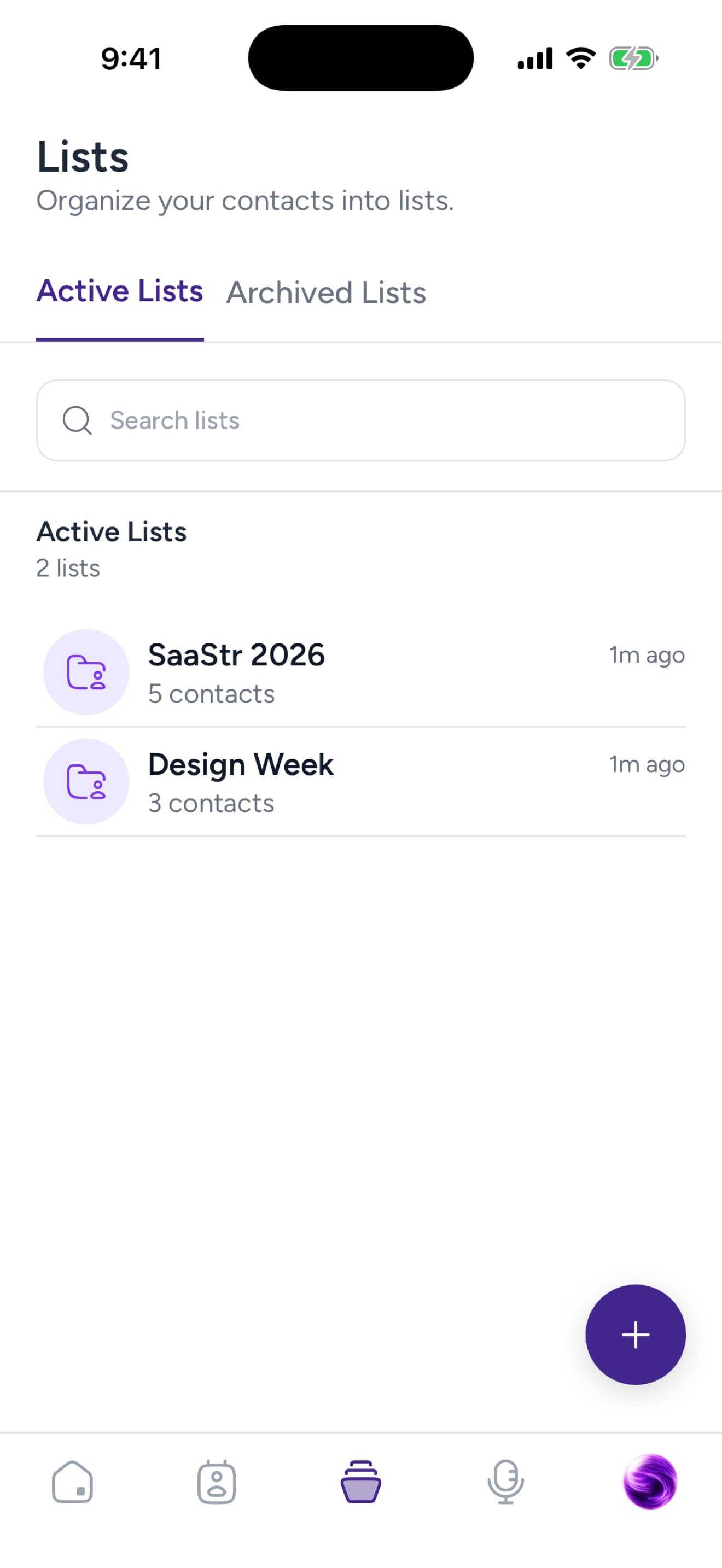
Before the event starts, choose where its conversations will live. This can be a contact List, a notes page, or a simple document in a system you already use; what matters is being able to find the day again without remembering every person’s name. “Design Forum, October 2026” gives you a clearer starting point than “New people.” If your tool supports a description at the group level, you can keep the shared date and place there instead of repeating them in every record.
Within that group, use a minimum record you can maintain when the schedule gets busy: the person’s name, where you spoke, a conversation cue, and any promise. It is tempting to design a more elaborate template, but a short record you actually finish is more useful than a detailed one you abandon after the first session. Choosing one place also avoids the later puzzle of deciding whether someone’s details are in a photo, an unsent messaging draft, or a scrap of paper.
Keep your own shareable details ready too. A digital card can help with exchanging contact information, but receiving a name or address does not capture the conversation automatically. Decide where that context will go.
While you are talking: make the introduction clear
The easiest time to clear up a name is usually while the introduction is still happening. “Sorry, I missed your name over the music” gives the person a straightforward way to repeat it, and saves you from building the rest of the conversation around a guess. As you talk, listen for the thread you might want to return to: a problem they are working on, a session you both attended, or a question you left open. That topic will help you recognize the relationship later far more than a label such as “interesting person.”
You do not need to force a memorable fact out of every conversation. Pay attention to what the person chooses to share and the parts that matter to the exchange. If you meet two people with the same name, a project or organization can help distinguish them without turning the note into a collection of personal details.
Before you part, clarify any real next step. “Would that checklist be useful? Where should I send it?” gives you a more reliable record than assuming every friendly conversation calls for a meeting. It is also fine to leave with no task at all.
Between conversations: capture one person at a time
A break between sessions is a good moment to connect the details you have collected, while the conversations are still easy to tell apart. A typed note can be enough, or you might prefer a spoken debrief that you review before saving. Either way, capture one person at a time so that their name, topic, and promise stay together. If you speak your notes, choose somewhere you will not broadcast private details to the people around you.
Group conversations need a little extra care because several people may contribute to the same topic. Knowing that someone offered to send a research paper is not quite enough if you cannot remember who made the offer. Rather than assigning the promise to the most plausible person, mark the gap and check it later. The example below shows why that small distinction matters.
Same first name, different conversation
These are fictional examples:
Alex Chen: coffee queue after the accessibility panel; discussed testing with volunteers; I offered our recruiting checklist.
Alex Rivera: lunchtime roundtable; asked about running a local design group; no next step agreed.
Still uncertain: one Alex mentioned a November workshop. I did not capture which person. Confirm before referring to it.
These notes give you more than a label to search for: the location helps you picture the introduction, while the topic tells you where the next conversation could begin. They also keep an uncertain detail separate from something you know happened. That means you can ask about the workshop without confidently attributing it to the wrong Alex. For a reusable structure, see what to include in a contact note.
The Lists screen provides a place to group contacts by event. Existing Kontextual product-design export; sample content is illustrative.

The end-of-day sort: promises, possibilities, and no action
Before you turn a day’s introductions into a long to-do list, review each record against the cards, messages, or notes you actually have. Correct names, check for existing contacts, and keep the conversation attached to the right person. A business card scan still needs a field-by-field check.
- Promises: identify anything you said you would send or do. Record the agreed timing, or choose a realistic reminder for yourself if no date was discussed.
- Possibilities: keep conversations you would like to continue, with the reason. Wanting to reconnect is not the same as the other person agreeing to a call.
- No action: some introductions can remain pleasant introductions. Save only the context you have a useful reason to keep, without manufacturing a task.
Sorting the next steps this way keeps a promise from getting lost among all the people you might enjoy speaking to again. It is not a ranking of the people themselves: a quiet conversation with no immediate opportunity can still be worth remembering, and a friendly introduction does not have to become a meeting request to count as a good connection.
In Kontextual, contacts, notes, Lists, and reminders can support this routine. Konny on mobile helps you talk through a conversation and review what it organizes before saving; the web app gives you more room for the later review. You still choose what is accurate and what deserves a next step.
When the event is over and you have already forgotten
Start with your own evidence: a message thread, a card, the event schedule, or a note you made. Use it to narrow the context, not invent a detailed conversation. An attendee directory can show who attended; it cannot prove you met or tell you what you discussed.
If you know the person but lost a detail, say so plainly. For example: “Good meeting you at the design roundtable. I remember we talked about volunteer onboarding, but I didn’t write down the resource you mentioned. Would you remind me of its name?” Only include the part you genuinely remember.
If you cannot tell whether you met someone, do not send “Great meeting you” just because their name appears on an event list. Either establish the context honestly or leave it alone. If the person does not reply, do not turn your incomplete notes into repeated requests for their time.
Use the record before the next conversation
Before reaching out, read the person’s note and check whether you owe them anything. Lead with a real shared detail, then deliver the promised next step. The aim of remembering is to make the next conversation easier for both of you.
For message examples and timing, continue to how to follow up after a networking event. If the conference was months ago, use the gentler restart in how to reconnect after a long time.